
Against the backdrop of deep segmentation in sporting goods tracks, the seemingly trivial overgrip industry is undergoing structural transformation. As high-frequency consumables for badminton, tennis, pickleball, baseball and other sports, overgrips are no longer low-cost accessories. Instead, they have realized value upgrading through experience optimization, technical iteration and scenario expansion. In 2026, the domestic overgrip industry has bid farewell to the extensive volume-oriented model, advancing rapidly toward specialized functionality, refined production, diversified scenarios and normalized customization. The niche accessory track is bursting with new growth momentum.
For a long time, the overgrip market was defined as an auxiliary sporting goods category. General consumers only recognized its basic anti-slip and sweat-wiping functions. In the past two years, the boom of mass sports has continued to heat up, and lightweight sports such as badminton and pickleball have gained widespread popularity. Sports participants have expanded from professional athletes to teenagers and general fitness enthusiasts, completely reshaping consumer demands in the overgrip industry. Consumers no longer only focus on prices, but put forward higher requirements for anti-slip performance, sweat absorption, skin-friendliness, breathability, and durability, pushing overgrips to complete the cognitive upgrade from disposable consumables to professional sports equipment.
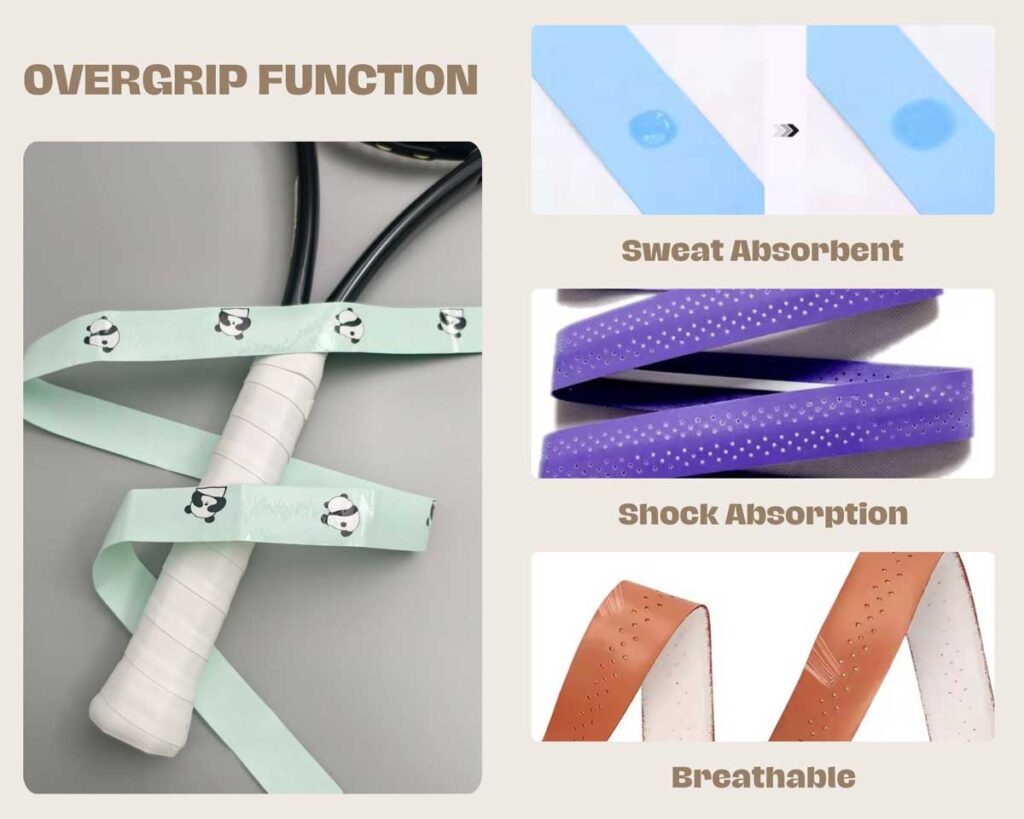
In 2026, the pace of technical iteration in the overgrip industry has accelerated significantly. In terms of material innovation, micro-permeable microporous materials and eco-friendly antibacterial materials have become mainstream R&D directions, breaking the limitations of traditional ordinary PU materials. Through process optimization, manufacturers solve pain points such as easy slipping and mildew of traditional overgrips, balancing anti-slip stability during high-intensity sports and skin-friendly comfort for daily use. Meanwhile, lightweight technology keeps making breakthroughs. Ultra-thin zero-feel grips and shock-absorbing cushion grips have been developed to precisely match different scenarios, including professional competitive training and casual recreation.
Intelligent and flexible transformation of production has become the core industry trend. Flexible customized production has become fully normalized. Factories can rapidly adjust color matching, texture, logo printing and functional parameters to meet personalized demands from brands, clubs and tournament organizers. Enterprises with independent R&D, in-house testing and fully traceable production systems have become core supply chain partners for brands, forming an industry pattern of “supply chain equals brand”.
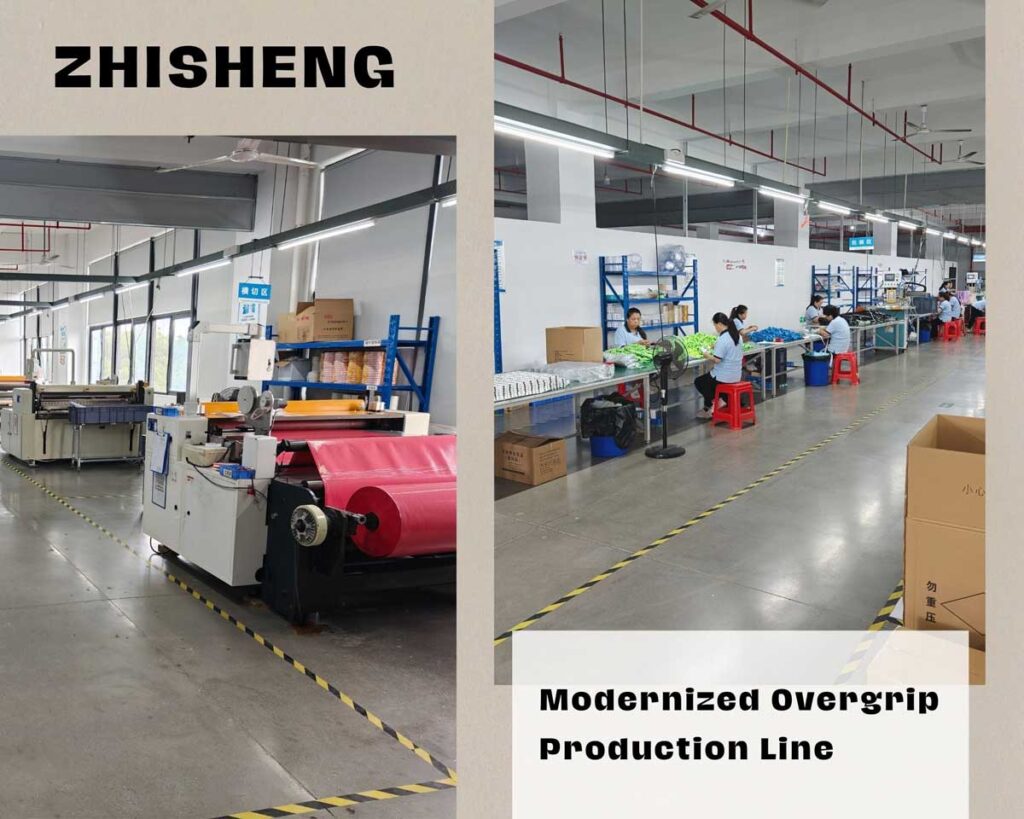
At present, numerous source factories rely on mature production capacity to provide OEM & ODM services for domestic and foreign brands. They break homogeneous competition in the industry by characteristic functional designs, attractive appearances, and full customization solutions to satisfy all types of consumer groups accurately.
Industry institutions predict that the overgrip industry will maintain steady growth over the next five years with an annual growth rate above 12%. Tightening environmental regulations and expanding demand from high-end overseas markets will give obvious competitive edges to enterprises with eco-material certifications, independent R&D capacity, flexible production, and self-owned brand influence.
Overall, 2026 marks a critical turning point for high-quality development of the overgrip industry. This once-overlooked niche sporting accessory track is undergoing a magnificent transformation driven by consumption upgrading, technical innovation and multi-scenario expansion. To break fierce low-price competition and achieve long-term growth, overgrip manufacturers must focus on technical innovation, segmented demands and dual domestic & overseas market layout. The industry will gradually step into a mature stage featuring standardization, branding and high-end positioning.